
Key Takeaways
- Droopy eyelids caused by ptosis can often be corrected with appropriate surgical treatment.
- The right procedure depends on the cause and severity of eyelid drooping.
- Common options include ptosis correction surgery, blepharoplasty, and frontalis sling surgery.
- Eyelid surgery may improve both visual function and facial appearance.
- A detailed specialist assessment is important before choosing treatment.
- TEC® provides individualized solutions for functional and cosmetic eyelid concerns.
Droopy eyelids can affect much more than appearance. While some people are mainly concerned about looking tired or older than they feel, others find that the eyelid begins to interfere with their vision over time.
Known medically as ptosis, droopy eyelids occur when the upper eyelid sits lower than normal. The condition may affect one eye or both eyes and can develop at any age. What many people do not realise is that eyelid drooping is not always caused by the same issue. In some cases, excess upper eyelid skin is responsible for the heavy appearance. In others, the problem lies in the muscle that lifts the eyelid.
Because the underlying causes can differ, treatment is never one-size-fits-all. Understanding why the eyelid is drooping is an important first step before considering any form of droopy eyelids treatment. In this article, we explore the common causes of ptosis, when surgery may be recommended, and the surgical options available to correct the condition.
What Causes Droopy Eyelids?
Several factors can contribute to eyelid drooping, and identifying the cause is one of the most important steps before treatment. Ageing is among the most common reasons. As we get older, the elevator muscle and its supporting tissues can gradually weaken or stretch. Some individuals are born with congenital ptosis. Certain nerve-related conditions can also affect eyelid position. When the nerves controlling eyelid movement are compromised, the eyelid may begin to sag.
Trauma or injury around the eye area sometimes damages the structures responsible for eyelid elevation. Long-term contact lens wear has also been associated with eyelid changes in some patients, particularly after many years of use.
In other cases, muscle fatigue, neurological disorders, or systemic medical conditions may contribute to ptosis. This is why a specialist evaluation is so important before recommending eyelid ptosis surgery.
When Do You Need Droopy Eyelid Surgery?
Not everyone with droopy eyelids chooses to have surgery. For some, the eyelid sits slightly lower but causes no real difficulty. For others, the impact becomes harder to ignore. The eyes feel heavy, vision seems less clear than before, or everyday tasks start requiring more effort.
There are also people who seek treatment simply because the drooping no longer reflects how they feel. They look tired, sleepy, or older, even when they are well-rested. Surgery is usually considered when the drooping starts affecting vision, comfort, appearance, or a combination of all three.
Types of Eyelid Drooping (Ptosis Classification)
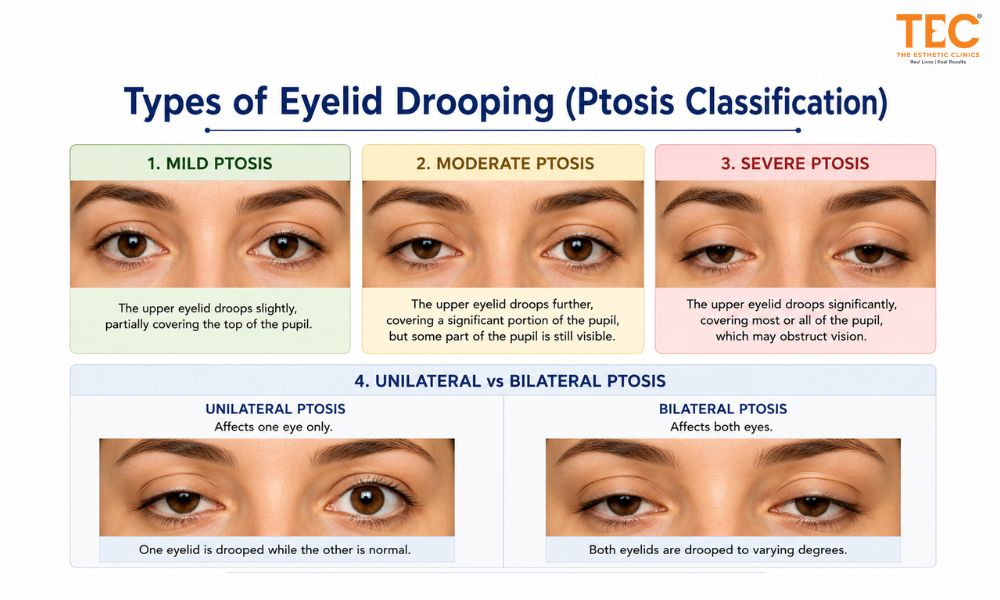
Mild Ptosis
At this stage, the change is usually subtle. The eyelid sits slightly lower than normal, but most people continue seeing clearly and notice the difference mainly in appearance.
Moderate Ptosis
The drooping becomes harder to ignore. Along with the visible change, the upper eyelid may begin to interfere with parts of the visual field.
Severe Ptosis
The eyelid drops low enough to affect vision more noticeably. Daily activities may become less comfortable as the pupil becomes partially covered.
Unilateral vs Bilateral Ptosis
Some people develop ptosis in one eyelid, while others experience it in both. The appearance and impact can vary depending on whether one or both eyes are affected.
Best Surgical Solutions for Droopy Eyelids
The right procedure depends on the reason behind the drooping. Common surgical options include:
Ptosis Repair Surgery
- Recommended when the eyelid muscle is weak or stretched
- Focuses on improving eyelid position by correcting the muscle
- Commonly performed for true ptosis
Blepharoplasty (Eyelid Lift Surgery)
- Suitable when excess upper eyelid skin creates a heavy appearance
- Removes loose or hooded skin from the upper eyelid
- May be combined with ptosis correction in some cases
Frontalis Sling Surgery
- Considered when eyelid muscle function is severely limited
- Uses the forehead muscle to assist with eyelid lifting
- Often performed in congenital or severe ptosis cases
Minimally Invasive Eyelid Correction
- May be suitable for selected patients
- Involves less extensive correction
- Recommended based on the degree and cause of the drooping
Recovery After Eyelid Surgery Ptosis
Recovery is often easier than patients expect, although the first week can test your patience. The eyelids may look swollen, bruised, or uneven at first, which is why surgeons rarely judge the final result in the early days after surgery.
Most of the recovery period is fairly uneventful. Eye drops, medication, and cold compresses are commonly used while the eyelids settle. Many patients also find themselves taking breaks from screens simply because their eyes feel more comfortable that way.
The biggest change usually comes with time rather than treatment. As the swelling reduces, the eyelids begin to settle into their new position. For most people, this process takes a few weeks, with recovery often falling within the 2–4 week range.
What Are The Benefits of Droopy Eyelid Surgery?
The impact of droopy eyelid surgery is often both functional and cosmetic. While some patients seek treatment because the drooping affects their vision, others are looking to correct the tired or heavy appearance caused by ptosis. Depending on the individual case, benefits may include:
- Improved vision in patients with severe ptosis
- A more open, refreshed, and alert appearance
- Better balance and symmetry between the eyes
- Reduced eye strain and forehead tension caused by compensation
- Long-lasting results in appropriately selected patients
Why Choose TEC® for Eyelid Surgery?
Eyelid surgery is a procedure where small differences can make a noticeable impact on the final result. An eyelid that sits too high may look unnatural, while one that remains too low may not fully address the concern. This is why careful assessment and surgical planning are such an important part of treatment.
At TEC®, eyelid surgery is approached with an understanding that appearance and function go hand in hand. Whether the concern involves excess skin, weakened eyelid muscles, or a more complex form of ptosis, the treatment plan is based on the findings of the individual case rather than a standard approach. The objective is to achieve a correction that feels appropriate for the patient, both in how the eyelids work and how they look.
FAQs
Can droopy eyelids be fixed permanently?
Many people worry that surgery will only be a temporary fix. In reality, ptosis correction is usually performed with the expectation of a long-lasting result. While the natural ageing process continues, the correction itself is not something patients typically expect to repeat every few years.
Is eyelid surgery ptosis painful?
The thought of surgery around the eyes often sounds worse than the recovery itself. Patients are generally more likely to mention swelling, bruising, or tightness during the first week than significant pain.
How long does droopy eyelid surgery take?
People are often surprised by how little time they actually spend in surgery. In many cases, the procedure takes around one to two hours, although this varies depending on the correction being performed.
Will scars be visible after eyelid surgery?
The eye area draws attention, so questions about scarring are completely natural. Surgeons usually place incisions within the eyelid’s natural crease, which helps them blend in as healing progresses.
Who performs droopy eyelid surgery?
Not every surgeon performs eyelid procedures regularly. Patients are generally advised to seek a surgeon with experience in cosmetic, reconstructive, or eyelid-specific surgery, where both appearance and function are considered.
What is the recovery time for eyelid lift surgery?
The first few days tend to test a patient’s patience more than anything else. Swelling and bruising gradually settle, with most people returning to their usual routine within two to four weeks.
Is Eyelid surgery safe?
Questions about safety are usually raised long before questions about appearance. Eyelid surgery has been performed for many years and is generally considered safe when carried out by an experienced surgeon after appropriate assessment.
What to Expect During Surgery
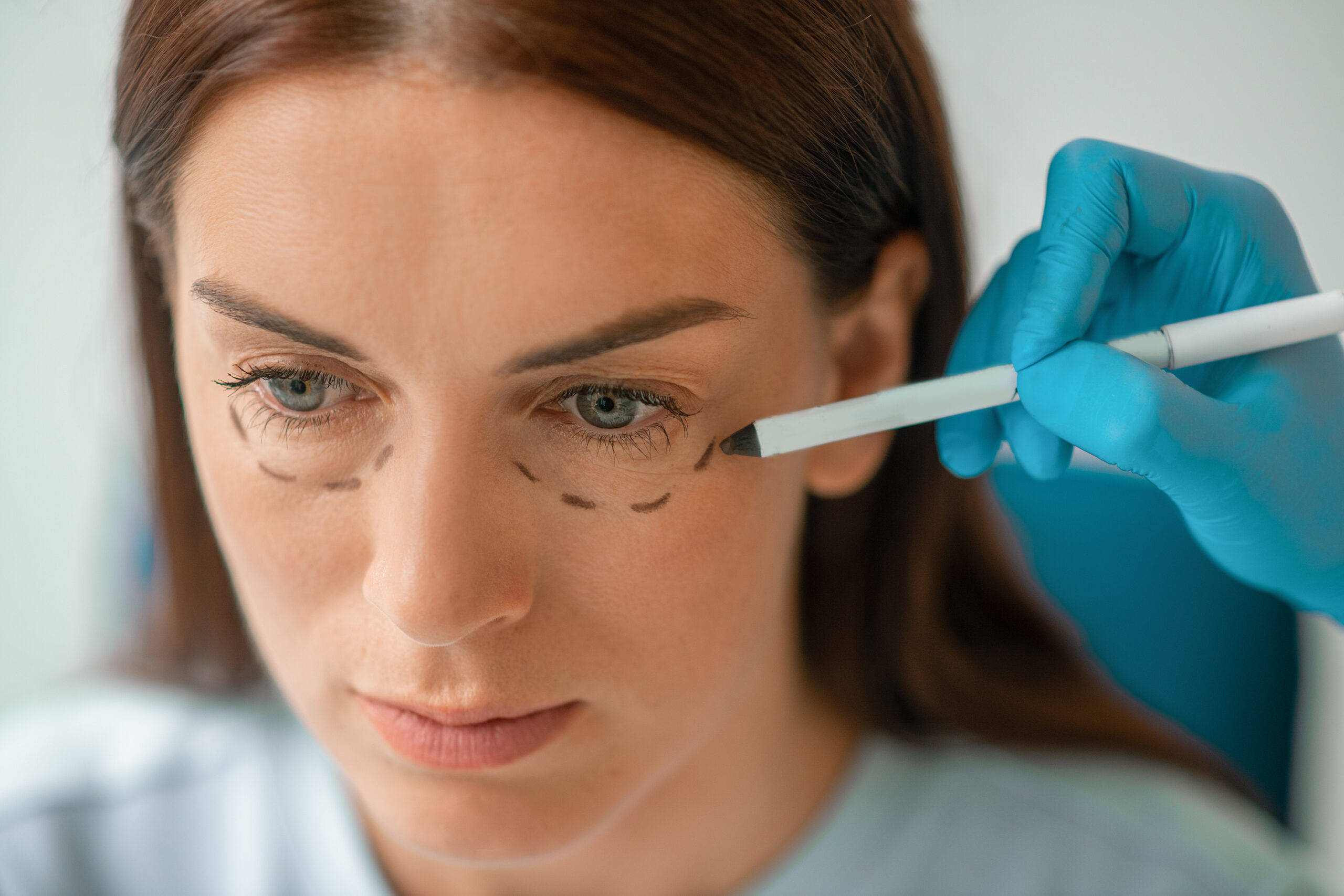
For most patients, the anticipation is often greater than the procedure itself. Before surgery begins, the eyelids are carefully assessed and marked, with the exact technique depending on the correction required.