

Key Takeaways:
- Skin pigmentation can develop due to sun exposure, hormonal changes, acne marks, ageing, or inflammation.
- The best approach depends on the type, depth, and cause of pigmentation.
- Dermatologist skin pigmentation treatment may include creams, peels, laser procedures, or combination plans.
- Indian skin pigmentation treatment needs careful planning because darker skin tones may react differently to aggressive treatments.
- Sunscreen and follow-up care play a major role in maintaining results.
Pigmentation doesn’t usually announce itself. It lingers. A mark from an old breakout stays a little longer than expected. A small patch looks darker than the surrounding skin. Months pass, and one day you realise your complexion isn’t as even as it used to be.
What makes it confusing is that the skin doesn’t leave many clues about why it happened. Two patches can look almost the same and still have completely different causes. Sun exposure may be responsible in one person, while hormones, inflammation, or the skin’s own healing process may explain it in another. That is why skin pigmentation treatment is never simply about fading a dark mark.
A dermatologist sees more than the pigmentation itself. They want to understand how it developed, what the skin has been exposed to over time, and whether there is anything continuing to trigger it. Those answers help shape a treatment plan that fits the individual, because treating pigmentation starts with understanding the skin, not just what is visible.
What Is Skin Pigmentation? and Its Causes
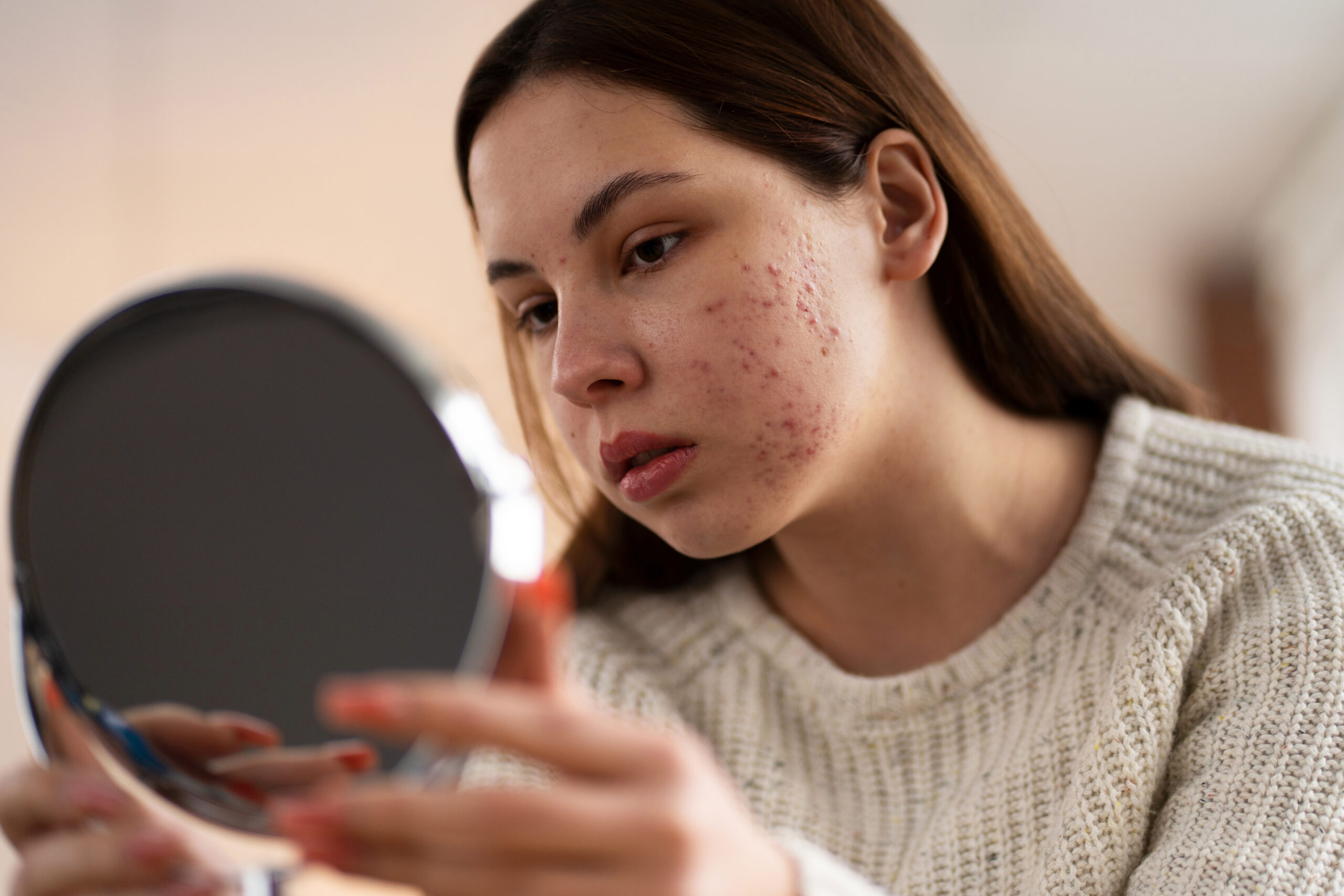
Pigmentation has a habit of showing up long after the skin has responded to something. By the time a mark catches your attention, whether it’s an acne spot that hasn’t faded or a patch that’s slowly become darker, the process behind it has often been going on for weeks or even months.
It happens because melanin, the pigment that gives skin its colour, is no longer spread evenly. Instead, it gathers more in some areas than others, leaving darker patches known as hyperpigmentation.
What those patches don’t tell you is how they got there. Similar-looking pigmentation can develop for very different reasons, which is why dermatologists spend as much time understanding the cause as they do looking at the mark itself.
What Are the Common Causes of Pigmentation?
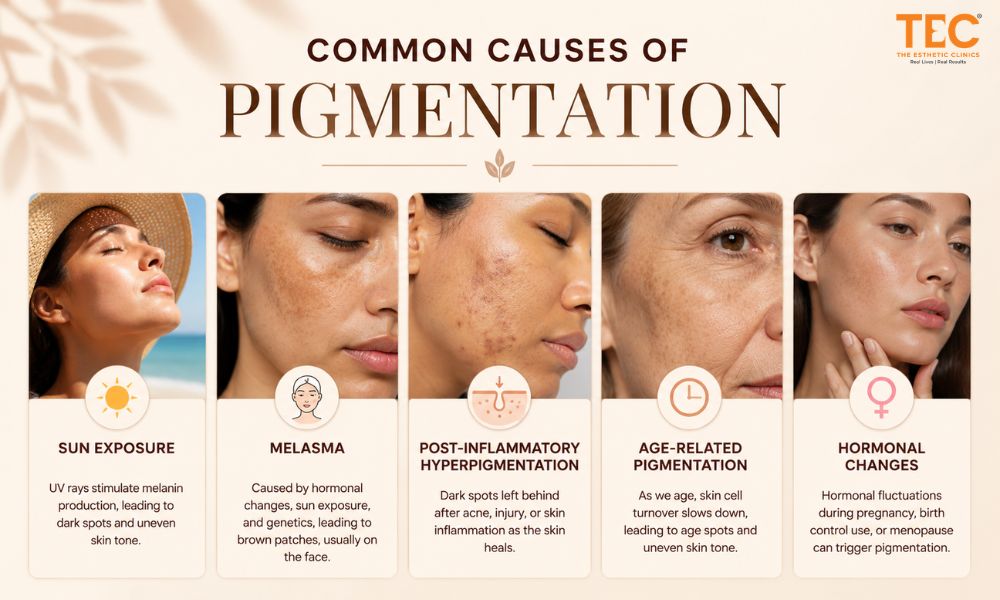
Pigmentation is often a sign that the skin has responded to something.
Sun exposure
Every time the skin is exposed to ultraviolet (UV) rays, it produces more melanin to help protect itself. Over the years, that natural response can become visible as tanning, freckles, sunspots, or patches of uneven colour.
Melasma
Melasma usually appears as brown or grey-brown patches across the cheeks, forehead, nose, or upper lip. It is commonly associated with hormonal changes and often becomes more noticeable after exposure to sunlight or heat.
Post-inflammatory hyperpigmentation
Sometimes the skin settles, but the colour takes longer to do the same. Acne is a common cause, although eczema, burns, insect bites, and other skin injuries can also leave darker marks behind, particularly in medium and deeper skin tones.
Age-related pigmentation
Many dark spots that appear later in life are linked to years of sun exposure rather than aging alone. They tend to develop gradually in areas that spend the most time in the sun.
Hormonal changes
Hormonal fluctuations can influence the way melanin is produced. Pregnancy, oral contraceptives, and certain hormonal conditions may increase the likelihood of pigmentation in some people.
How Dermatologists Diagnose Pigmentation Concerns
Pigmentation isn’t diagnosed by the mark alone. Two patches may look very similar but have completely different causes, so a dermatologist first tries to understand how the pigmentation developed. Along with examining the skin, they will ask when you first noticed it, whether it followed acne, sun exposure, hormonal changes, or another skin concern.
Only then is it easier to decide on the next step. Pigmentation closer to the surface may respond to topical treatments or chemical peels, while deeper pigmentation may sometimes be considered for laser treatment for skin pigmentation. In Indian skin especially, treatment is usually planned with extra care to help avoid further pigmentation.
Which Treatments Are Most Effective for Skin Pigmentation?
People often ask what the best treatment for pigmentation is. The honest answer is that it depends. Pigmentation can look very similar from one person to another, but what is causing it underneath the skin may be completely different.
Topical Treatments
For many people, creams are where treatment begins. A dermatologist may recommend ingredients that help reduce excess pigment or encourage normal skin renewal.
Chemical Peels
Chemical peels are commonly used for pigmentation closer to the surface of the skin. They remove damaged outer skin cells in a controlled way, allowing fresh skin to emerge.
Laser Treatment
Some types of pigmentation may respond to laser treatment for skin pigmentation, while others may not. The decision depends on the type of pigmentation, how deep it sits, and your skin tone.
Combination Treatments
Quite often, there isn’t just one treatment involved. A dermatologist may combine creams, peels, or laser procedures with a simple skincare routine.
How Dermatologists Choose the Right Pigmentation Treatment for You
One of the biggest misconceptions about pigmentation is that there is a single treatment that works for everyone. Your natural skin tone, the type of pigmentation, how long it has been there, and what may have caused it all matter. Even treatments you’ve used before can influence what is recommended next.
This is why treatment plans often look different from person to person. Mild pigmentation may improve with creams and good sun protection alone. Other cases may call for chemical peels or, where appropriate, laser procedures. It’s to improve the pigmentation while keeping the skin healthy and reducing the chance of it returning.
Special Considerations for Indian Skin Types
Indian skin behaves a little differently when it comes to pigmentation. Once the skin becomes inflamed, whether from acne, a burn, a rash, or even an aesthetic procedure, it is more likely to leave behind a dark mark. That is simply because it contains more melanin.
For many people, slower treatment turns out to be the safer treatment to improve pigmentation without creating new problems, especially for those with melasma, sensitive skin, or skin that tends to pigment easily.
Conclusion
Pigmentation isn’t always as straightforward as it seems. A dark patch can tell you that something has changed in the skin, but it doesn’t explain why it happened. That answer is often found by looking beyond the mark itself.
This is why there isn’t one treatment that works for everyone. What helps one person may not be the right choice for someone else, even when the pigmentation looks very similar. Understanding how it developed is often what points a dermatologist towards the most suitable approach.
Treating pigmentation also calls for a little patience. The skin needs time to respond, and changes usually happen gradually. Alongside treatment, everyday habits such as protecting your skin from the sun and following a simple skincare routine can make a real difference. In the end, managing pigmentation is less about finding a quick fix and more about understanding your skin and giving it the care it needs.
FAQs
What is the difference between melasma and hyperpigmentation?
Hyperpigmentation is a broad term for darkening of the skin due to excess melanin. Melasma is a specific type of hyperpigmentation that often appears as symmetrical patches and is commonly linked with hormones, sun exposure, and heat.
How long does it take to see results from skin pigmentation treatment?
Results vary depending on the cause and depth of pigmentation. Mild pigmentation may begin improving within a few weeks, while deeper or long-standing pigmentation may take several months and multiple treatment sessions.
Is laser treatment suitable for all skin tones?
Laser treatment may be suitable for many skin tones, but it must be chosen carefully. Darker skin tones need specific laser settings and expert supervision to reduce the risk of irritation or further pigmentation.
Can pigmentation return after treatment?
Yes, pigmentation can return, especially if triggers such as sun exposure, hormonal changes, acne, or irritation continue. Maintenance skincare and sunscreen help reduce this risk.
What is the best laser treatment for skin pigmentation?
The best laser treatment for skin pigmentation depends on the type, depth, and cause of pigmentation, as well as your skin tone.