
When you get out of bed one day and you realize there are some small brownish spots appearing on your face. You would think that your problem might be related to excessive sunlight, but in a few days, you discover that these spots are getting darker by the day. In case this happens to you, then you need not be alone as there are millions of others suffering from the same thing every day, and they mostly are people with medium or dark skin tones.
What is Melasma?
This is something that differs from a regular sun spot. The spots are irregular and they always appear symmetrically on both sides of your face. They do not affect your body physically as they are neither itchy nor painful. However, the psychological impact is quite hard for you to bear. You will start applying a lot of concealer just to hide your spots even before having your first cup of coffee in the morning. This can seriously ruin your self-confidence.
Why does this occur?
Before solving the problem, one has to find out what causes this to happen. Often referred to as the “mask of pregnancy,” it happens due to several reasons, but hormonal fluctuations are definitely one of them. During pregnancy, or even changing birth control pills, a woman will experience a rush of estrogen and progesterone that will activate her pigment-producing cells completely.
And, in most cases, hormones work together with sunlight. When ultraviolet rays get to those pigment-producing cells (melanocytes), they stimulate their activity. Five minutes of being outside without protection will erase all efforts made in the past few months, and some people just have genetically predisposed skin for that.
The real foundation: Sun Protection
If you remember only one thing from this, let it be this: finding a Skin Treatment Melasma plan is a waste of time if you aren’t obsessed with sun protection. I mean it. You can spend a fortune on fancy serums or clinic visits, but if you skip the SPF, the patches will be back by Tuesday.
And I don’t mean a quick, thin layer of whatever is in your moisturizer. You need real, broad-spectrum coverage. Recent studies show that even visible light—the stuff coming through your office window or your car windshield—can trigger melasma.
That is why tinted sunscreens are a game-changer. They usually contain iron oxide, which acts like a physical shield against both UV rays and visible light. It gives your skin the “quiet time” it needs to actually start healing.
Topical creams: Where most people start
Once you’ve got the sunscreen habit down, the next step is usually topical. A dermatologist will likely try to calm those overactive pigment cells with specific ingredients.
Hydroquinone has been the go-to for years. It basically puts the brakes on melanin production. But you shouldn’t use it forever. It’s a short-term fix, usually only for a few months, and you need a doctor watching over it. If you use it wrong for too long, it can actually cause permanent bluish staining. Obviously, that’s the last thing we want.
However, for sustained treatment, products containing azelaic acid, kojic acid, or niacinamide should be used, all of which are considerably more reliable. Azelaic acid has become increasingly popular in this case since it is among the few products that can be applied even when pregnant.
When the situation becomes complicated, the doctor may prescribe the so-called “triple cream,” consisting of a bleaching agent, a retinoid for exfoliating cells, and a low-dose steroid for preventing potential irritation. Another highly effective component currently gaining popularity due to its ability to reduce melanocytes is tranexamic acid.
When creams aren’t enough
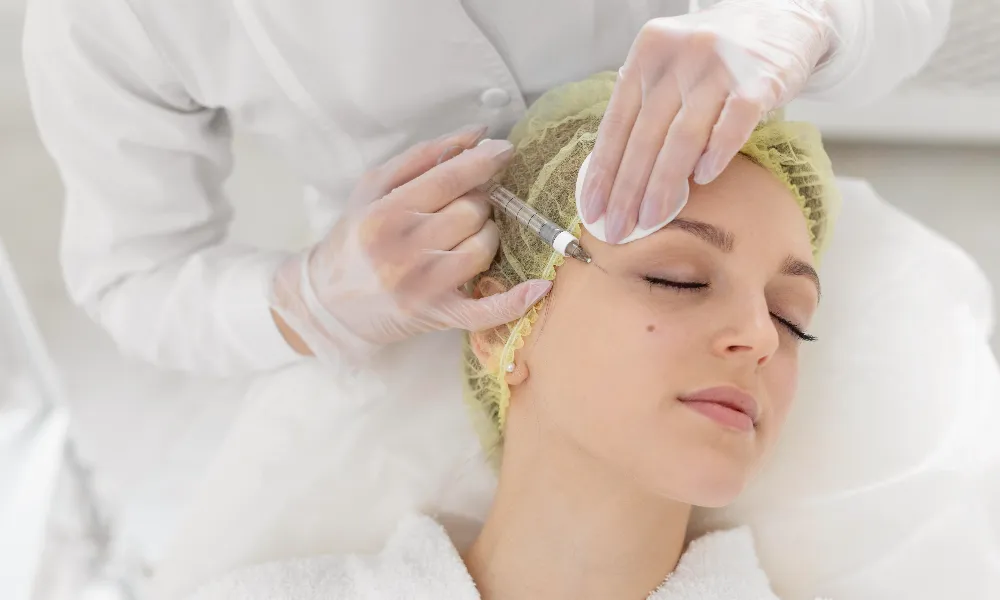
Sometimes the pigment is just buried too deep for a cream to reach. That’s when you have to look at professional procedures.
However, should you visit a special clinic such as The Esthetic Clinics, then the procedure requires extreme caution. Should the treatment be too harsh, inflammation occurs, and melanin production increases as a natural reaction.
Chemical peels – This therapy involves application of acidic agents that remove the outermost skin layer. The pigmentation is included.
Microdermabrasion – You may think of this technique as a deep cleansing of the skin that makes it easier for the creams to reach deeper layers.
Laser therapy – There are types of lasers that can destroy the melanin without harming the surrounding tissue. However, if used improperly, the heat can cause even greater problems and aggravate melasma.
The long game
Here’s the hard truth: there isn’t a “one and done” cure. If someone tells you they can fix it forever in one session, they’re lying. It’s about management.
Once you find a Skin Treatment Melasma routine that works and those spots start to fade, you enter the maintenance phase. You stay glued to your tinted sunscreen. You wear a hat at the beach. You stay in the shade.
Fading melasma is a test of patience. It’s frustrating and slow. But with a dermatologist who understands the science behind this problem, you won’t have to put up with this for the rest of your life. So just take a deep breath, find yourself an appropriate sunscreen, and remember you will be glowing again, given some time.