
Hair loss in women is quite common. It just doesn’t show up in a very obvious way most of the time. Not patches. More like thinning… spread out. A slightly wider part. Less volume when hair is tied. Sometimes just more strands than expected on the comb. It’s gradual. Easy to ignore at first. Then it isn’t.
Over the last few years, hair transplant procedures have become more accepted among women. Earlier, it was mostly linked to men. That association has shifted. Now the approach is different too, more subtle, less “done”, more in line with how hair loss actually looks in women.
The two techniques that usually come up are FUE (Follicular Unit Extraction) and FUT (Follicular Unit Transplantation). Both help improve hair density. But beyond that, they’re not really the same in how they play out.
Which is Better for Women?
- FUE is generally preferred for women as it involves minimal scarring and faster recovery
- FUT is suitable when a larger number of grafts is required, especially in more advanced cases
For women, this decision isn’t only about the method. It’s also about visibility, routine, comfort. How it fits day to day.
Clinics like The Esthetic Clinics usually provide advanced hair loss solutions with a focus on personalised treatment and natural-looking results.
What is FUE Hair Transplant?
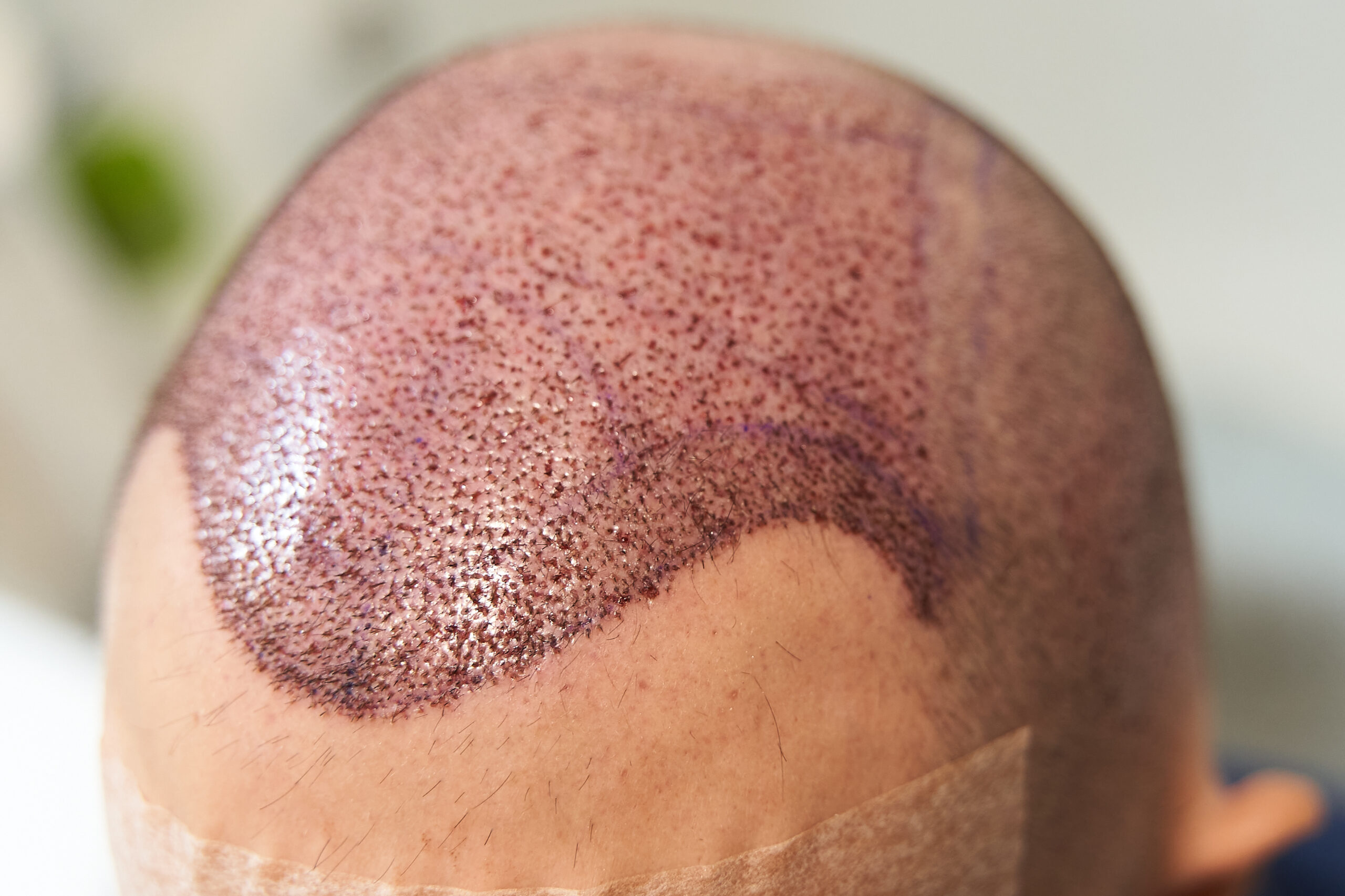
FUE (Follicular Unit Extraction) is a modern hair transplant technique in which individual hair follicles are extracted from the donor area and implanted into areas with thinning or hair loss. It is considered a minimally invasive procedure, as it does not involve large incisions or stitches.
Procedure Overview
- Individual hair follicles are extracted using specialised micro-punch tools
- These follicles are then implanted into thinning or bald areas
- Placement follows the natural direction of hair growth
Key Benefits of FUE for Women
- No linear scar, which works well for shorter or tied hairstyles
- Minimal downtime, so routine can resume relatively quickly
- Natural-looking results with better control over hairline design
- Less invasive overall, so discomfort is usually lower
Ideal Candidates for FUE
- Women with mild to moderate hair thinning
- Those who prefer minimal scarring and a discreet procedure
What is FUT Hair Transplant?
FUT (Follicular Unit Transplantation), also known as the strip method, works differently. A thin strip of scalp is removed. From that, follicles are separated and then implanted where required.
Because these follicles come from a permanent zone, growth continues naturally. One advantage is that more grafts can be collected in a single session.
Key Benefits of FUT for Women
- Higher graft yield in one session, useful for better coverage
- More cost-effective compared to FUE
- Helps achieve good density in fewer sittings
- Uses natural follicular units (1-4 hairs per graft) for coverage
Ideal Candidates for FUT
FUT may be suitable for:
- Women with advanced hair thinning or larger areas to cover
- Those who require a higher number of grafts
- Individuals with a good donor area and hair density
- Those comfortable with a linear scar (usually covered by surrounding hair)
FUE Hair Transplant vs FUT: Key Differences
Both FUE and FUT are effective hair transplant techniques, but understanding the FUE vs FUT difference helps in choosing the right approach based on recovery, scarring, and graft needs. Understanding these differences can help in choosing the right approach based on your needs.
| Feature | FUE Hair Transplant | FUT Hair Transplant |
| Technique | Individual follicle extraction | Strip method |
| Scarring | Minimal, dot-like scars | Linear scar |
| Recovery Time | Faster (5-7 days) | Slightly longer (10-14 days) |
| Pain Level | Less discomfort | Moderate |
| Graft Yield | Moderate | High |
| Cost | Higher | Lower |
| Suitability for Women | Highly preferred | Case-dependent |
FUE Hair Transplant vs FUT: Which is Better for Women?
FUE is generally preferred for most women and is often considered the best hair transplant method for women due to minimal scarring and faster recovery.
Why FUE is Preferred for Women
In many cases, it comes down to how it fits overall.
- Minimal visible scarring: No strip removal means no linear scar only small dot marks, usually not noticeable
- Faster recovery: Healing tends to be quicker
- Better for diffuse thinning: Allows more precise placement of individual follicles
FUE works by extracting follicles one by one. That control tends to show in the final result, which is why FUE for women is often preferred.
When FUT May Be a Better Option
FUT still makes sense in certain cases.
- When a large number of grafts is required
- When budget is a concern
- When higher density is needed in one sitting
Since FUT uses a strip method, more follicles can be taken at once. That’s where it helps.
Final Consideration
There isn’t a fixed answer here. It depends on the extent of hair loss. Donor area condition. Individual comfort. When comparing FUE vs FUT success rate, both procedures typically show a success rate of around 90-95% when done correctly.
Hair Transplant Cost for Women in India
Hair transplant costs in India for women vary. Quite a bit, actually.
Average Cost per Graft
- FUE: ₹40 – ₹120 per graft
- FUT: ₹30 – ₹80 per graft
Estimated Total Cost
- Typically ranges between ₹50,000 to ₹2,00,000
What Affects the Cost?
- Number of grafts required
- Technique used
- Hair characteristics like thickness and density
- Clinic and specialist expertise
FUE vs FUT Difference: Cost Perspective
- FUE has a higher upfront cost but is often preferred for aesthetic reasons
- FUT is more economical, especially when more grafts are needed
Recovery and Results Timeline
Recovery Time
- FUE: 5-7 days
- FUT: 10-14 days
FUE usually heals faster. FUT can take longer. Stitches play a role there.
Results Timeline
- 2-4 weeks: Shedding phase (temporary hair fall, which is normal)
- 3-6 months: New hair growth begins to show
- 9-12 months: Full results with improved density
Final results can vary. Aftercare matters. So does how the procedure was done.
Risks and Side Effects
Hair transplant procedures like FUE and FUT are generally safe when performed by experienced specialists. Still, side effects can occur.
Common Side Effects
- Swelling around the forehead or scalp
- Redness and mild discomfort
- Temporary shedding of transplanted hair
These are usually temporary.
Rare Complications
- Infection
- Poor graft survival
How to Minimize Risks
- Choose experienced clinics like The Esthetic Clinics
- Follow post-procedure care instructions carefully
- Attend follow-up consultations
Why Choose The Esthetic Clinics?
When it comes to hair transplant, technique is only one part. Planning and execution matter just as much.
At The Esthetic Clinics, the approach is more personalised. Each case is evaluated based on hair pattern, donor area, and long-term expectations.
- Advanced techniques for both FUE and FUT procedures
- Experienced specialists involved at different stages
- Customised treatment plans for women
- Focus on natural-looking results over time
- Presence across major cities in India
FAQs
Is FUE hair transplant safe for women?
Yes, FUE is considered safe for women when performed by experienced specialists. It is minimally invasive, so the risk of complications is low with proper care.
Which is less painful, FUE or FUT?
FUE is generally less uncomfortable as it does not involve stitches or removal of a scalp strip. FUT may involve slight tightness during recovery.
What is the success rate of FUE vs FUT?
Both FUE and FUT have a high success rate of around 90-95%, depending on the expertise of the specialist and proper aftercare.
Can women get natural results with a hair transplant?
Yes, natural results are possible when the procedure is done with proper planning, including hairline design and correct placement of follicles.
How long does recovery take after FUE?
Initial recovery usually takes about 5–7 days, while visible hair growth starts after a few months.