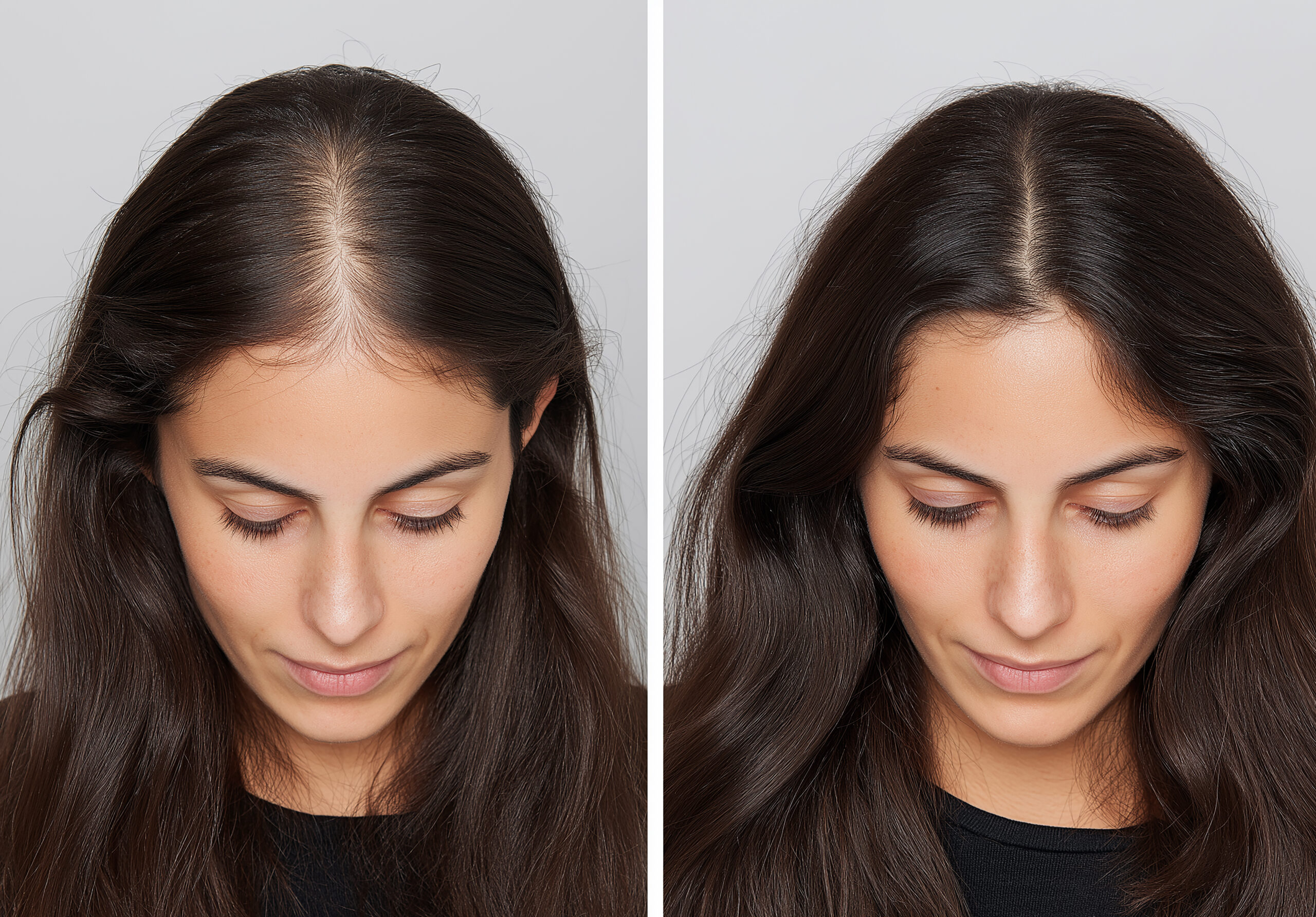

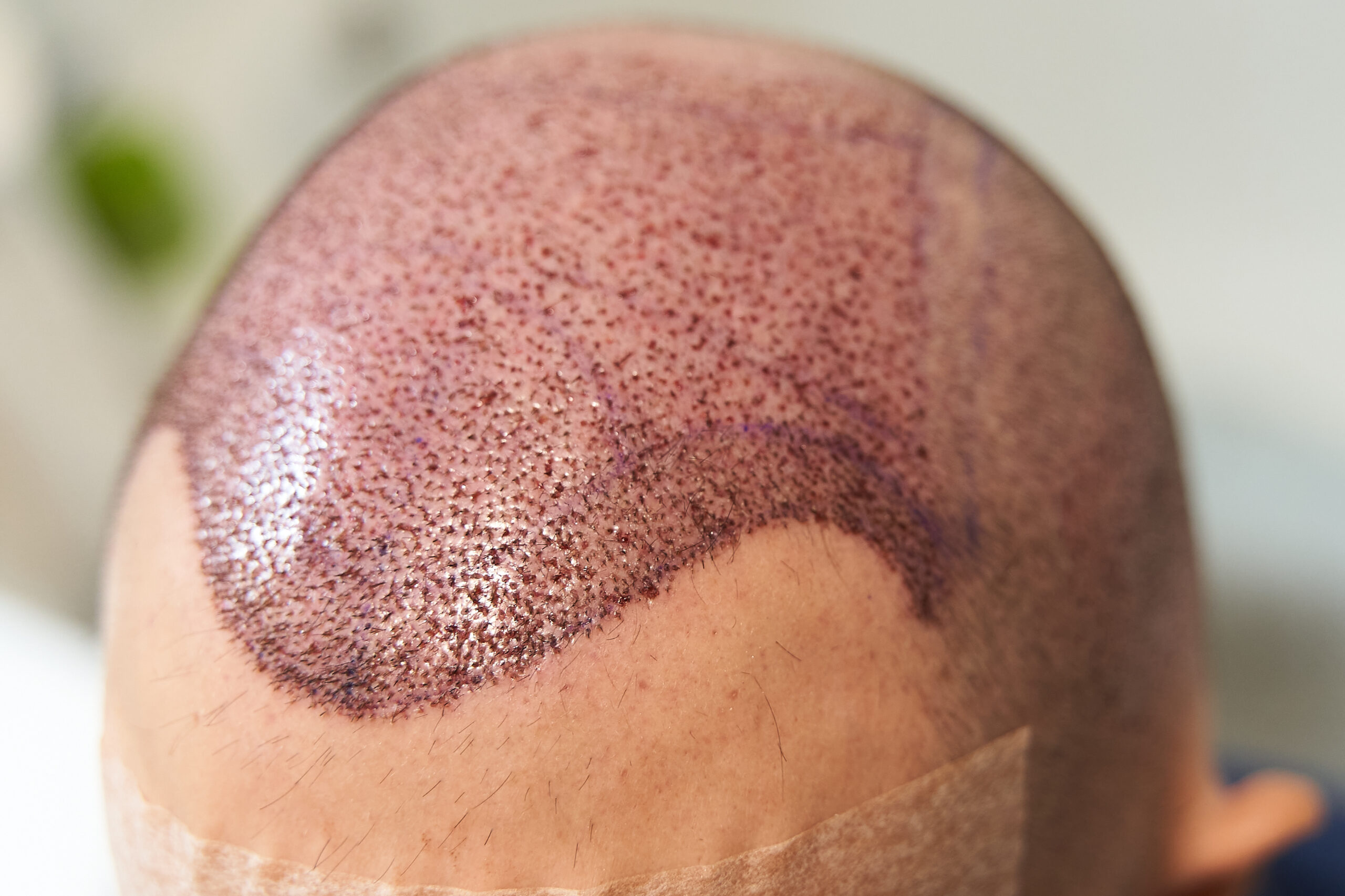
Key Takeaways:
- Graft count alone does not determine the success of a hair transplant.
- Long-term hair transplant planning should focus on donor preservation and future hair loss progression.
- Overharvesting the donor area can limit future hair restoration options.
- Medicines and regenerative therapies like QR678 Neo® may help improve hair density before surgery.
- A medically driven hair transplant consultation evaluates pattern stability, donor quality, and long-term goals before deciding graft numbers.
- The best hair transplant plans focus on natural-looking results that age well over time.
If you search for hair transplant information online, almost every page talks in numbers: 2,000 grafts, 3,500 grafts, 5,000 grafts; ₹30 per graft, ₹60 per graft, “unlimited grafts packages”. It is no surprise that many patients sit down in the consultation and ask within the first five minutes: “Doctor, how many grafts will I need?”
In a medically driven, future-oriented practice, that is actually the least important question at the beginning. The more powerful question is: “What is the long-term plan for my hair, my donor and my biology?”
What Happens When You Start With A Number?
On the surface, “How many grafts?” sounds logical, even scientific. Underneath, it creates three major problems.
It turns a medical plan into a shopping list
When everything is reduced to a per-graft quote, the conversation slides from medicine to metering:
- More grafts are assumed to be better value.
- A higher count is equated with a better result.
- A lower per-graft rate feels like a smarter deal.
In reality, none of these assumptions are automatically true. A well-planned 2,200-graft procedure into a stable pattern can look better and age better than a poorly designed 4,000-graft “mega session” done into unstable, actively thinning areas.
The moment we start talking like “3,000 vs 4,000” instead of “What does your pattern need now, and what might it need 10 years from now?”, we have already lost the plot.
It ignores donor economics and overharvesting
Your donor area (back and sides of the scalp) is not a bottomless ATM of follicles. For most patients, the safe, lifelong donor capacity is in a limited range, and can be even lower if there is diffuse thinning or a narrow safe zone.
If we chase maximum coverage “in one sitting” because the quote sounds attractive:
- We may over-extract from a small safe donor zone.
- The back of the head can become visibly thin or “moth-eaten”.
- We may leave you with very few reserves if your hair loss progresses and you genuinely need another surgery later.
You can always transplant more in the future; you can never put back grafts that have already been removed.
It assumes today’s pattern is tomorrow’s pattern
“How many grafts?” usually only looks at today’s photographs. Androgenetic alopecia, however, is a dynamic disease that often progresses over decades.
If we design only for what we see now, without thinking about where your pattern is heading, we risk:
- A hairline that looks perfect at 28 but too low and “wig-like” at 45.
- Dense work in areas that will later need to be “chased” as adjacent zones thin out.
- A result that looks good for a few years, then slowly unravels because the biology around it was never controlled.
Good transplant planning is not about “how many grafts can we push into the scalp today?”, but “how will this look as your hair changes over the next 10–20 years?”.
The questions that actually matter more than graft count
When someone goes to a clinic for a hair consultation, the questions that truly help one build a safe, long-term plan are very different from “How many grafts?” These are :
1. “What is my diagnosis and likely long-term pattern?”
Not all hair loss is the same. Before we even talk about surgery, we clarify:
- Is this androgenetic alopecia, or a combination of other conditions?
- What is your age of onset, rate of change, and family history?
Only then can we estimate your probable end pattern and plan a hairline and coverage that will still make sense when you are 45 or 55.
2. “How strong and stable is my donor area?”
Under magnification and with proper mapping, we evaluate:
- The density and calibre of donor hair.
- Whether there is miniaturisation in areas that would traditionally be considered “safe”.
- A realistic lifetime donor budget, not just what we can technically extract in one sitting.
This tells us how much we should use now, and how much we must protect for potential future procedures.
3. “What can be achieved with medicines and regenerative treatments?”
A medically driven clinic does not jump over biology to reach the operating theatre. We first ask:
- Have we optimised systemic and topical therapy (finasteride/dutasteride, minoxidil, and other appropriate medications)?
- Can regenerative options such as QR678 Neo, autologous therapies, or exosome-based treatments thicken miniaturising hairs and improve global density, reducing how many grafts you actually need?
Many patients are surprised how much can be achieved by correctly using medicines and therapies before we even talk about extraction.
4. “Where does transplant fit into my 10–15-year roadmap?”
Instead of “How many grafts in this sitting?”, the better question is “How many grafts, across my lifetime, make sense for me?”
This automatically changes the surgical conversation:
- From “maximum grafts now” to “appropriate grafts now, with reserves for later”.
- From “cover everything in one go” to “prioritise framing the face and cosmetically critical zones first, then reassess as your pattern evolves”.
Only after this roadmap is clear does the graft number become a logical output rather than the starting point.
How To Reframe Your First Question About Grafts In The Consult
If you are considering a hair transplant, you can change the quality of your consultation simply by changing your opening question.
Instead of:
- “Doctor, how many grafts will you give me?”
Try:
- “Doctor, what is your long-term plan for my hair, my donor and my biology?”
Instead of:
- “Clinic X offered 3,500 grafts – can you match that?”
Try:
- “Given my likely future pattern, how many grafts do you think I should not use right now?”
Instead of:
- “What is your per-graft rate?”
Try:
- “What are you doing to protect my donor and keep options open for my 40s and 50s?”
The answers to these questions will tell you very quickly whether you are sitting in a centre that thinks in terms of packages and numbers, or one that thinks in terms of patterns, biology and decades.
A hair transplant is not a Black Friday “bulk buy” offer; it is more like curating a limited-edition art collection from your own scalp. Once a piece leaves the gallery, it is gone for good, which is why the first question cannot be “How many pieces can you ship out today?” but “Which ones should we move, where, and in what sequence so the whole picture still makes sense 15 years from now?” If that is the kind of thinking you want behind your surgery, then your consultation should feel less like haggling over a rate card and more like sitting with someone who is quietly planning your next few decades of hair, not just your next selfie.
FAQs
1. Why is “How many grafts do I need?” not the right first question?
Graft count is only one part of a hair transplant plan. Before deciding the number of grafts, doctors first assess your hair loss pattern, donor stability, scalp condition, and how your hair may continue to change over time. This helps create a safer and more natural long-term strategy.
2. What factors determine how many grafts are needed?
The number of grafts required depends on several factors, including the extent of hair loss, donor density, hair calibre, future progression of thinning, and the overall hairline design planned for long-term balance and natural results.
3. Can too many grafts damage the donor area?
Yes. Extracting excessive grafts in one session may lead to overharvesting, which can cause visible thinning in the donor area and reduce the availability of grafts for future procedures if hair loss progresses further.
4. Can medicines reduce the number of grafts required?
In some cases, medicines and regenerative therapies may help improve miniaturised hair, enhance overall density, and stabilise ongoing hair loss. This can sometimes reduce the total number of grafts needed during surgery.
5. Can regenerative therapies be used before a hair transplant?
Yes. Regenerative therapies may be used before surgery to support scalp condition, improve hair quality, and strengthen miniaturising follicles as part of a broader hair restoration plan.
6. Why is long-term hair transplant planning important?
Hair loss often continues to progress over the years. Long-term planning helps ensure that donor reserves are preserved properly and that the transplanted result continues to look natural as the surrounding native hair changes with age.
7. What should I ask during a hair transplant consultation?
Instead of focusing only on graft numbers, it is better to ask about your long-term hair loss pattern, donor area stability, future hair preservation, and whether medicines or regenerative treatments may help improve your overall result.
8. How do doctors decide the right graft strategy?
A medically driven clinic usually evaluates your hair loss progression, donor quality, scalp biology, and response to non-surgical treatments before recommending a graft strategy that balances current needs with future planning.