

Key Takeaways:
- Hair transplant is not always the first step for hair loss management.
- Medicines and regenerative therapies help stabilise ongoing hair loss before surgery.
- QR678 Neo® may support hair density and improve miniaturised follicles.
- Hair transplant redistributes existing hair and does not stop future hair loss progression.
- Younger patients and diffuse thinning cases often require treatment first before surgery.
- Long-term results usually depend on combining medical support with transplant planning.
Many patients walk into a consultation with one question in mind: “Doctor, how many grafts do I need?” In a medically driven, science-based practice, that is actually the wrong starting point. The first decision is far more fundamental: Should we treat first, operate first or just observe first? The order in which we use medicines, regenerative therapies, and hair transplants has a major impact on how your hair behaves over the next decade, not just in the first year.
This article will outline how medically driven, science based clinics decide between medicines and transplant, and how newer regenerative treatments like QR678 Neo® have changed that balance.
Medicines vs Transplant: What Are We Comparing?
Medicines And Non-Surgical Therapies
When we talk about “medicines” for pattern hair loss (androgenetic alopecia), we usually mean a combination of:
- Systemic therapies
- Finasteride or dutasteride in appropriate male patients
- Anti-androgens such as spironolactone in selected women
- Low-dose oral minoxidil in carefully chosen cases
- Topical agents
- Topical minoxidil (foam or solution)
- Combination formulations where appropriate
- Regenerative treatments
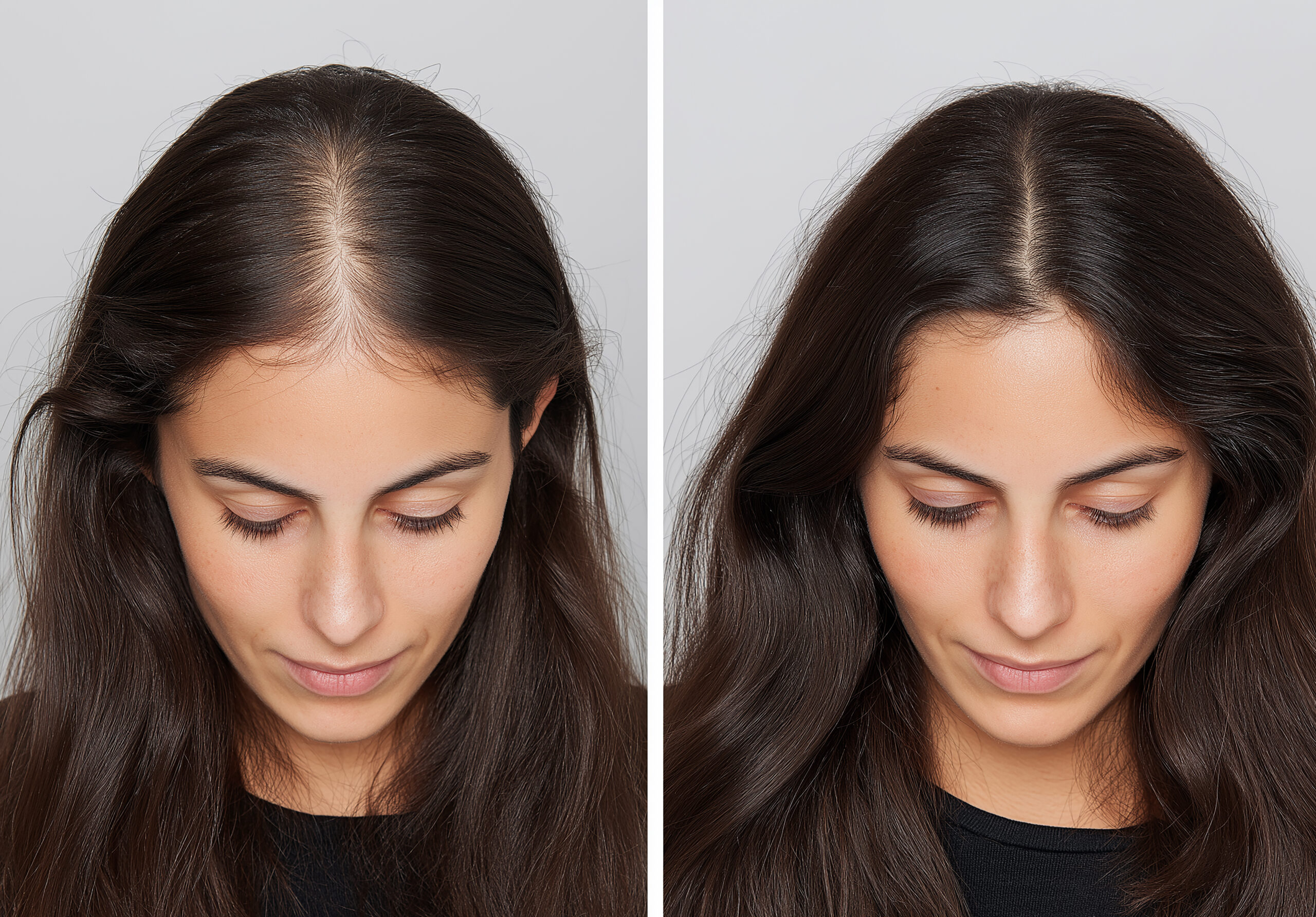
- QR678 Neo®, a first in class, dual-patented blend of 6 plant-derived polypeptides, which has been clinically proven to combat hair loss and provide improvements in hair density and shaft calibre.
- Exosome-based treatments: Extracellular vesicles derived from mesenchymal stem cells or dermal papilla/other sources, with early clinical data and systematic reviews showing promising gains in hair density and thickness, and generally good short-term tolerability, but still limited by small sample sizes and heterogeneity.
- Adjunctive measures
- Correcting iron, vitamin D, thyroid or other deficiencies when present
- Reducing traction, harsh chemical or heat exposure, which contribute to breakage and shedding
None of these modalities “CREATE” new follicles in a completely bald area. Their purpose is to slow or halt progression, rescue miniaturising follicles, and improve density and hair quality. They determine the biological landscape on which we later consider surgery.
Hair Transplant
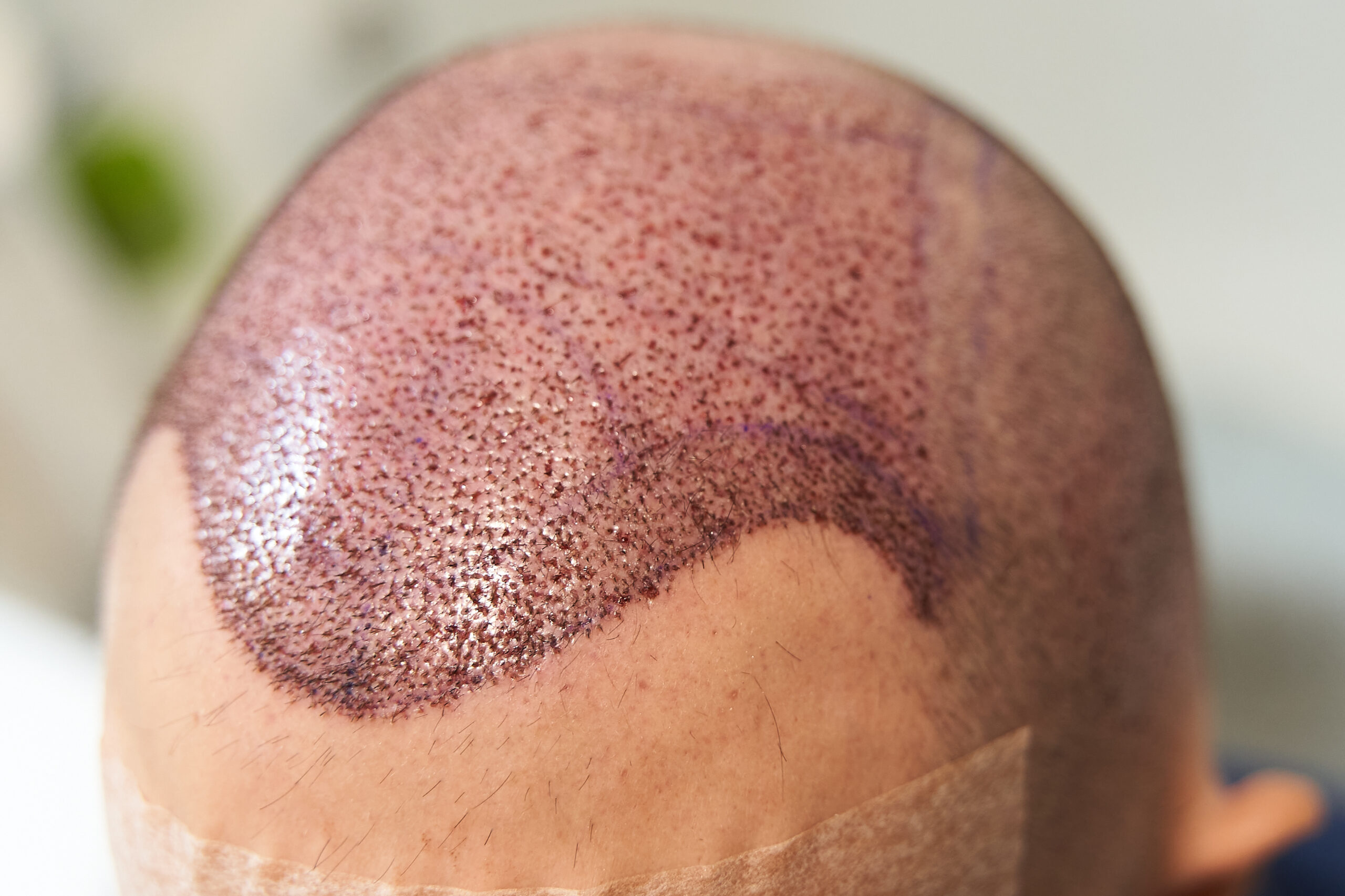
Hair transplant, whether via FUE (follicular unit excision) or FUT (strip), is a redistribution of existing hair. Follicular units from relatively permanent donor zones – back of the head (usually occipital and parietal scalp) are moved into areas of thinning or baldness.
Key scientific points:
- Transplant does not change the androgen sensitivity of native (non-transplanted) hair.
- Donor supply is finite; over-harvesting can cause visible donor thinning and scarring.
- Long-term results depend heavily on:
- how fast the pattern continues to progress,
- how well the donor remains preserved, and
- whether we continue to support the scalp biology with appropriate therapies, post-transplant.
Because of this, the sequence “medicines → transplant” versus “transplant → medicines” is not trivial – it is central to long-term planning.
When Should We Treat First And Operate Later?
There are clear clinical scenarios where a science-based approach favours optimising biology before surgery.
1. Young patients with active progression
Early-onset androgenetic alopecia (for example, significant loss in the early 20s) often correlates with a more aggressive long-term course. Operating into a rapidly changing pattern risks a situation where a nice transplant result is quickly undermined by ongoing loss around it.
Here, QR678 Neo® regenerative therapy can be particularly useful.
2. Diffuse thinning and borderline donor
Some patients do not have a classic “bald patch” but rather diffuse thinning across the scalp, including potential donor zones. If we harvest aggressively from a donor that is itself miniaturising, we may end up with poor growth and visible donor depletion.
In such cases, medicines plus regenerative therapies (QR678 Neo®):
- Improve miniaturised hair,
- Help delineate a truly permanent donor from unstable areas,
- Clarify whether transplant is appropriate, and if so, how aggressive we can safely be.
Here, treatment is both diagnostic and therapeutic; it reveals whether there is a viable transplant plan at all.
3. Women and medically complex hair loss
In women, hair loss patterns often coexist with hormonal, thyroid, nutritional, or autoimmune issues. Similar complexities arise in men and women with telogen effluvium, drug-induced shedding, or scarring alopecias.
In these patients, the rational sequence is:
- Careful evaluation (history, exam, appropriate lab work),
- Correct systemic issues and institute appropriate medical therapy,
- Use regenerative therapies like QR678 Neo® to enhance regrowth and stabilisation in androgenetic patterns,
- Consider transplant only if a stable pattern with a safe donor emerges.
4. Early stages or modest cosmetic concern
A patient with very early Norwood changes or mild thinning that responds well to medical and regenerative therapy may not need a transplant at all in the near term.
Here, the most ethical approach is:
- Treat first,
- Monitor and reassess periodically,
- Offer surgery only if a clear, stable defect remains that truly warrants it.
When Can A Transplant Come Earlier in The plan?
Equally, there are situations where, after a proper work-up, it is appropriate to bring surgery in earlier, typically alongside ongoing medical and regenerative therapy.
1. Stable pattern with a well-defined deficit
An older patient, or someone with a pattern that has been essentially unchanged for several years, and with a strong donor, is very different from a rapidly progressing young man.
2. Already optimised medically, but plateaued
Some patients have:
- Been on finasteride/dutasteride and minoxidil appropriately for 12+ months,
- Completed a course QR678 Neo® with clear but partial improvement and stabilisation,
- Yet still have “gaps” that matter to them cosmetically.
In these cases, biology has been optimised within realistic limits. Transplant then becomes a logical next step:
- Surgery restores density where hair is truly absent,
- Medicines and regenerative therapies continue to protect remaining native hair and support the overall result.
3. Localised non-androgenetic problems
For scars, post-surgical defects, or localised areas such as eyebrows or beard, the primary issue is structural rather than systemic biology. Once underlying disease is stable, transplant can be the main modality; medicines and QR678 Neo® may play a supportive role.
How a medically driven clinic actually decides
In day-to-day practice, it is useful to keep three core questions in mind for every case:
- How fast is your pattern changing?
- How safe is your donor for lifelong use?
- How much can biology still help you?
The goal is not to be “pro-medicine” or “pro-surgery,” but to be pro-sequence: using the right modality at the right time, in the right patient, at the right clinic, for the right reason.
FAQs
1. Should I use medicines before a hair transplant?
In many cases, doctors recommend stabilising hair loss with medicines or regenerative therapies before considering surgery. This helps improve long-term planning and preserve existing hair.
2. When is a hair transplant recommended?
A transplant is usually considered when the hair loss pattern is stable, donor density is healthy, and medical treatments have already provided maximum realistic improvement.
3. Can QR678 Neo® be used alongside a hair transplant?
Yes. QR678 Neo® may be used before a hair transplant to help reduce ongoing hair loss and improve hair density. It may also be used post-transplant to support hair quality and overall hair restoration outcomes.
4. Do I still need treatment after a hair transplant?
Yes. Hair transplant does not stop future hair loss in native hair, so continued medical or regenerative support may help maintain long-term results.
5. Is hair transplant suitable for diffuse thinning?
Diffuse thinning requires careful evaluation because donor areas may also be affected. Doctors often recommend treatment and stabilisation before surgery in such cases.