

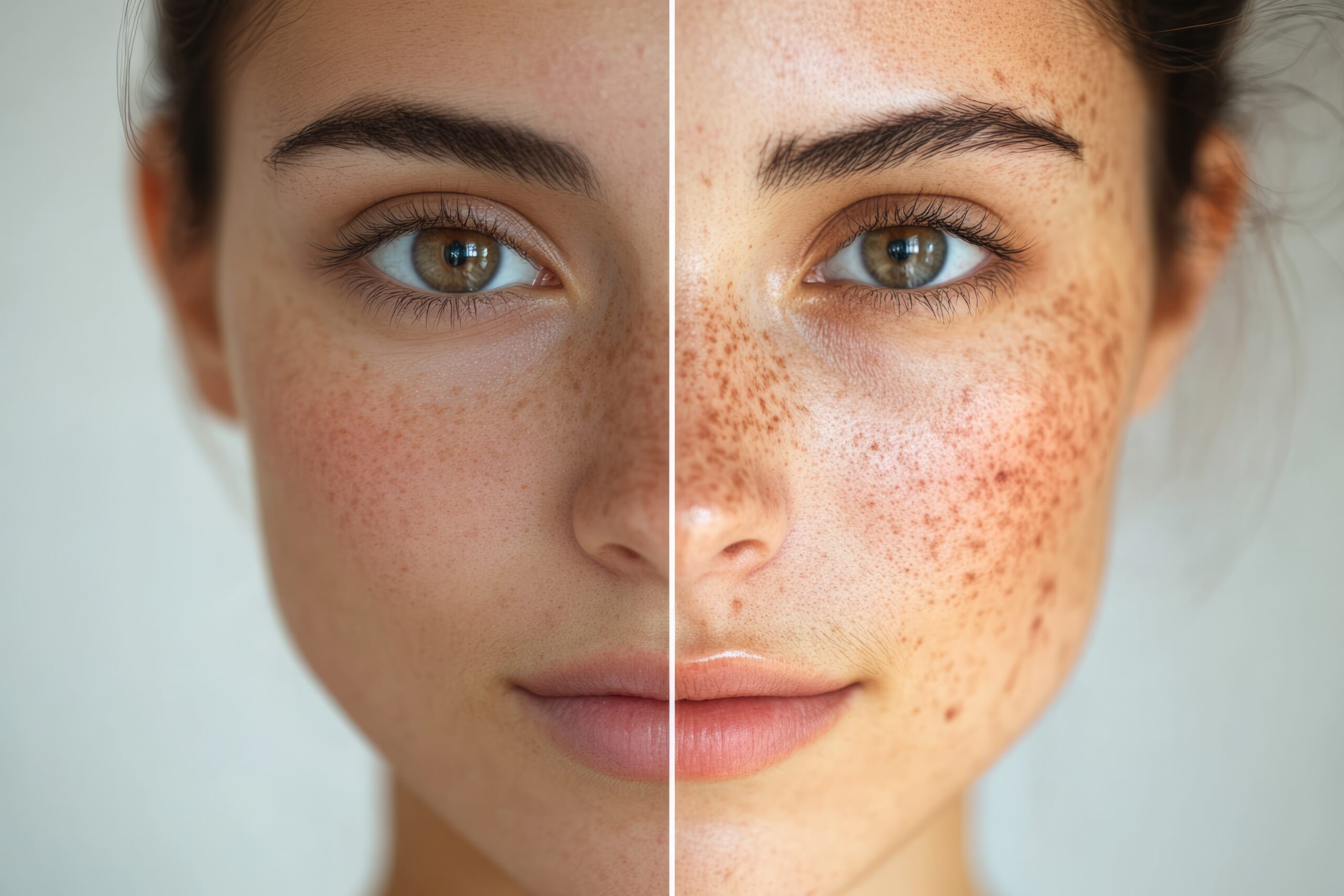
Key Takeaways:
- Hyperpigmentation and melasma both stem from dysregulated melanin production, though they differ in underlying cause, depth of pigmentation, and clinical behaviour.
- Getting the diagnosis right means looking at the pigmentation pattern, the skin phototype, and whether pigment sits in the epidermis, the dermis, or both.
- Which treatment gets chosen depends on the diagnosis itself, options range from topical depigmenting agents and chemical peels to laser procedures or a combination of these.
- Daily photoprotection isn’t optional. Ultraviolet radiation and even visible light can reactivate melanocyte activity, which is often what drives recurrence.
- Melasma in particular needs a longer view, clinical treatment paired with ongoing maintenance skincare and regular dermatological follow-up.
Changes in skin pigmentation are among the most frequent reasons people seek dermatology consultations. The dark patches involved can look alike, but conditions such as hyperpigmentation and melasma differ in their underlying mechanisms, the depth at which pigment is deposited, and how they respond to treatment. Getting the diagnosis right, then, is the essential first step before any skin pigmentation treatment in Mumbai is chosen.
Modern management goes well beyond simply lightening what’s visible. Dermatologists look at melanin distribution, skin phototype, hormonal influences, ultraviolet exposure, and any prior inflammation to build a treatment strategy suited to the individual. This guide covers the common causes of pigmentation disorders, the treatment options available, and practical steps to reduce recurrence.
What Is Hyperpigmentation & Melasma?
When dark patches appear on the skin, dermatologists call it hyperpigmentation. The process is simple enough: cells start producing extra melanin, and that pigment clusters unevenly. Some areas darken while the surrounding skin stays lighter.
Hyperpigmentation has many names. Doctors may use terms like dyschromia. Patients often just call them “spots.” The most common areas are the face, arms, and hands because they receive the strongest sunlight. Even small exposures add up over time. Sunspots, freckles, and stubborn blotches appear.
Melasma sits within this group but carries its own identity. It is marked by symmetrical brown or gray patches across both cheeks, the forehead, and sometimes the jawline. Unlike freckles that fade in winter, melasma clings on. That is why people search for reliable melasma treatments in India instead of hoping it will disappear naturally.
In countries like India, Australia, or high-altitude regions, sunlight is intense. Even rays passing through a car window can trigger or deepen pigmentation. Dermatologists in India occasionally run a biopsy to confirm diagnosis, though melasma is usually identified by appearance.
While hyperpigmentation rarely harms physical health, the impact on confidence is real. It occurs more frequently in darker skin tones. Mediterranean, Asian, African, and Latino groups report it in higher numbers. And so, melasma treatment in India has grown into a common and important area of dermatology.
Common Types of Pigmentation Disorders
Pigmentation problems do not follow a single pattern. They appear in different ways, shift in severity, and demand separate treatments. Some conditions darken the skin, others strip it of color entirely. Knowing how each behaves helps in choosing the right care.
- Melasma
Melasma shows up as brown or gray patches, most often on the cheeks, forehead, or above the lip. The patches usually mirror each other on both sides of the face. It is generally termed as the ‘pregnancy mask’. Melasma occurs because of hormonal changes that take place during pregnancy, and it is manifested as pigmented, patchy regions typically throughout the face (excluding the eye region). Melasma can be an epidermal (upper skin), dermal (lower skin) or mixed/combined (dermal and epidermal) problem. Melasma rarely disappears on its own, which is why so many patients turn to melasma treatments to manage it. - Post-inflammatory hyperpigmentation (PIH)
PIH forms after the skin has healed from an injury, acne breakout, burn, or even certain cosmetic procedures. During the healing process, pigment cells overproduce melanin, leaving a darker mark behind. These spots fade, but slowly, sometimes lasting many months. Darker skin tones are particularly prone to PIH, and the patches often look more prominent. - Freckles and sunspots
Both connect to long-term sunlight exposure. Freckles are small and can fade in cooler months with less UV. Sunspots, also called solar lentigines, arrive later in life, are larger, and remain year-round. They serve as a visible reminder of cumulative sun damage. - Vitiligo
Vitiligo strips color from the skin completely. The immune system mistakenly destroys pigment cells, creating sharp, white patches that can spread unpredictably. The contrast makes them highly noticeable, which can affect confidence as much as the condition itself. - Albinism
A genetic condition where melanin is almost absent. Skin, hair, and eyes all appear very light, and sunlight sensitivity is high. - Other pigment changes
Medications, rare disorders like ochronosis, or environmental exposures can also disrupt pigmentation, though they occur less frequently.
Each case requires its own plan. That is why melasma and hyperpigmentation treatment must always be tailored to the patient rather than applied as a single solution.
What Causes Hyperpigmentation and Melasma?
What triggers this surge in melanin? The answer varies.
- Sunlight is the strongest factor. UV rays stimulate pigment cells into overproduction, and unprotected skin darkens quickly.
- Hormones matter as well. Pregnancy often sparks melasma, which is why it is nicknamed the “mask of pregnancy.” Oral contraceptives and thyroid disorders can do the same.
- Genetics creates a predisposition. Family history raises the risk.
- Medications such as antibiotics, chemotherapy, or seizure drugs sometimes darken skin.
- Injuries like acne scars, burns, or cosmetic treatments can leave behind lingering marks.
- Lifestyle elements such as stress, poor diet, or lack of rest worsen pigmentation that already exists.
With melasma, sunlight plus hormones form the most common combination. That is why prevention is built around sun protection and gentle daily care.
How Are Hyperpigmentation and Melasma Diagnosed?
Diagnosis is more than a glance. Dermatologists in Mumbai and across India study the skin under a Wood’s lamp or dermatoscope to find out how deep the pigment goes. Shallow pigmentation often responds to topical creams. Pigment set deeper in the skin requires more advanced options.
Skin type influences treatment. Fairer skin may handle strong peels or lasers well. Darker Indian and Asian tones are more reactive, so treatments must be careful and measured. Aggressive therapy can worsen pigmentation instead of clearing it.
A clear diagnosis sets the foundation for safe and successful hyperpigmentation melasma treatment.
Skin-Lightening & Whitening Topical Treatments for Hyperpigmentation
Topical therapy is usually the first step in melasma treatments.
- Hydroquinone reduces melanin production. Effective, but only under medical supervision, as overuse irritates skin or rarely causes ochronosis.
- Retinoids improve skin turnover. They boost the effect of other creams while also softening fine lines.
- Kojic acid and Vitamin C lighten pigmentation gradually and provide antioxidant support.
- Azelaic acid helps fade marks and also controls acne.
No topical works without sun protection. Daily SPF 50 or higher, broad-spectrum, plus hats or shade are essential. Without it, pigmentation returns stronger.
Alpha hydroxy acids (AHAs) such as glycolic or lactic acid exfoliate pigmented cells. Gentle peels with AHAs can improve results over time.
Doctors sometimes prescribe combination creams containing hydroquinone, retinoids, and mild steroids. These are effective but must be used only for short cycles under supervision.
Chemical Peels, Microdermabrasion & LASER Procedures for Hyperpigmentation
When creams cannot handle stubborn pigmentation, procedures provide extra help.
Chemical peels remove pigmented surface cells. Glycolic, salicylic, and TCA peels are common choices. Several mild sessions are safer than one aggressive peel, particularly for darker skin.
Microdermabrasion polishes the skin surface with fine crystals or a diamond tip. It smooths texture and makes topical agents work better. Best for mild pigmentation.
Laser treatments are powerful but require precision.
- Q-switched Nd: YAG lasers break down pigment particles that the body can clear away. They are widely used for freckles, sunspots, and stubborn melasma.
- Fractional lasers stimulate collagen and resurface skin. Useful when pigmentation and scarring appear together.
- IPL (Intense Pulsed Light) may help some cases, but for melasma it is risky. Misuse worsens pigmentation, so many specialists avoid it.
In India, patients are advised to seek experienced dermatologists or cosmetic surgeons for these options. Poor technique leads to scarring or rebound pigmentation, which is harder to treat than the original spots.
Treatment Timeline & What to Expect for Hyperpigmentation & Melasma Treatment
Results take time. Hyperpigmentation melasma treatment rarely delivers overnight.
- Weeks 1 to 4: Topical creams may begin fading fresh spots. Some peeling can occur.
- 2-3 months: Patches lighten noticeably. Patients feel encouraged, though stubborn areas remain.
- 6 months: Clear improvement with combined approaches. Maintenance care begins here.
- Long term: Melasma is chronic. Even after clearance, sunscreen and periodic therapies are needed to prevent recurrence.
Doctors always explain: improvement is the goal, not a permanent cure. Setting realistic expectations prevents disappointment.
Quick Home Tips to Deal with Hyperpigmentation of Skin
Professional treatments matter, but everyday care is what holds the results together. Simple steps at home can stretch the benefits and keep pigmentation from creeping back.
- Start with sunscreen
Morning light, late afternoon glare, even sunlight slipping through a car window can undo weeks of treatment. A broad-spectrum sunscreen with SPF 50 or higher is the anchor. Add a hat or sunglasses when you can. - Aloe vera for calm and repair
Fresh gel from the plant, or skincare with aloe high on the ingredient list, soothes irritation and supports gradual fading of mild spots. Its cooling feel alone makes it worth the habit. - Green tea for antioxidants
Oxidative stress worsens pigmentation. Green tea reduces that damage. Drink it regularly, and if your skincare includes it as an extract, that is an extra layer of defense. - Feed the skin from within
Vitamin C, Vitamin E, and Omega-3 work on repair and resilience. Citrus fruits, leafy greens, nuts, and seeds bring these nutrients in naturally. Pair them with consistent hydration. - Do not pick or scratch
Every pimple you squeeze or scab you peel risks turning into a dark spot that lingers. Let healing happen by itself. - Moisturize every day
A fragrance-free, gentle moisturizer locks water into the skin, keeps the barrier strong, and reduces the irritation that can trigger flare-ups.
These habits are not replacements for professional melasma treatments, but they support the progress and lower the chances of relapse.
Conclusion
Managing hyperpigmentation and melasma successfully starts with figuring out what is actually causing it, rather than treating every dark patch the same way. How deep the pigment sits, the patient’s skin phototype, hormonal factors, and years of sun exposure all play a part in deciding which treatment will actually work and how well it will hold up over time.
The best results usually come from a plan built around the individual, combining the right topical treatment, procedural options where needed, daily sunscreen, and regular follow up. Seeing a dermatologist early also lowers the chances of the pigmentation becoming stubborn or long-lasting, and makes it easier to build a treatment plan suited to that person’s skin.
FAQs
Can hyperpigmentation go away on its own?
Mild post-inflammatory hyperpigmentation can fade over time as the skin naturally renews itself. Melasma and deeper pigmentation are different though. These usually need proper dermatological treatment and rarely resolve on their own.
How can I tell whether I have melasma or regular pigmentation?
Melasma tends to show up as symmetrical brown patches on the face, while other types of pigmentation follow different patterns and have different causes. The only reliable way to know for certain is a clinical examination by a dermatologist.
Which treatment works best for hyperpigmentation on Indian skin?
There is no single answer here. It depends on the type of pigmentation, how deep it sits in the skin, your skin phototype, and what caused it in the first place. A dermatologist might suggest topical medication, chemical peels, laser treatment, or some combination of these.
Can hyperpigmentation come back after treatment?
It can, particularly with melasma. Sun exposure and hormonal changes are common triggers for recurrence. Using sunscreen daily and keeping up with maintenance care afterward makes a real difference in keeping it from returning.
Is laser treatment safe for melasma?
It can be an option in certain cases, but only after proper clinical evaluation. Choosing the right laser and the right settings matters a lot here, since the wrong approach can actually make the pigmentation worse instead of better.
What should I avoid during hyperpigmentation treatment?
Sun exposure, tanning, harsh exfoliation, and picking at the skin should all be avoided. Each of these can trigger more inflammation and slow down progress.
How many sessions are usually needed for pigmentation treatment?
This varies depending on the diagnosis and the treatment method chosen. Most procedural treatments take more than one session, and progress is usually checked at follow up visits along the way.
When should I see a dermatologist for pigmentation?
If pigmentation appears suddenly, keeps spreading, comes back often, or simply is not improving with regular skincare, it is worth getting it checked. Catching it early makes it easier to plan the right treatment.