
Key Takeaways:
- Ultherapy uses focused ultrasound energy to stimulate collagen remodelling and improve skin firmness.
- It is generally suited to mild to moderate skin laxity rather than substantial excess skin.
- Common treatment areas include the face, jawline, neck & selected brow-area concerns.
- Individual results vary according to skin quality, degree of laxity, age, and collagen response.
- Temporary redness, swelling, tenderness, sensitivity or discomfort may occur after treatment.
- A clinical assessment helps determine whether Ultherapy is appropriate and what results can realistically be expected.
As skin ages, it slowly loses its firmness. Collagen and elastin levels drop, facial fat thins and moves lower, and the deeper supporting tissues lose strength. The jawline, lower face, and neck are usually where this shows first.
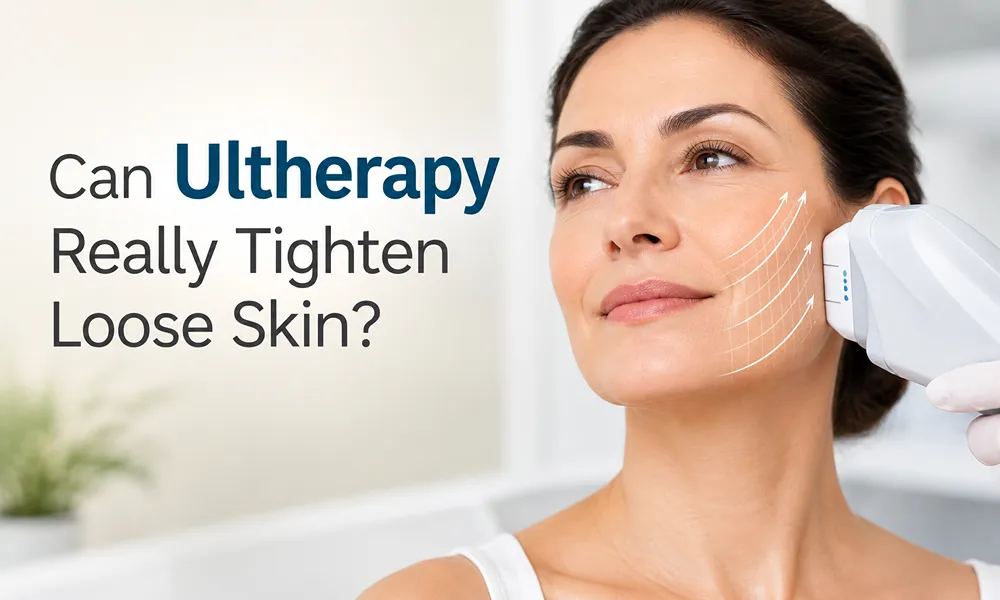
Ultherapy offers a non-surgical way to address it. Focused ultrasound energy is directed to precise depths under the skin, where it heats small areas of tissue while leaving the surface untouched. The body responds by producing fresh collagen, which is why the tightening effect builds slowly over the months after treatment.
Someone with mild or moderate sagging will usually see a better result than someone with significant loose skin, and skin quality plays a part as well.
Why Does Skin Become Loose Over Time?
Loose skin doesn’t appear overnight. It develops slowly as the structures that hold the skin firm begin to change. From our mid-twenties onward, the body makes less collagen and elastin, so skin gradually loses its strength and its ability to spring back. At the same time, facial fat thins and the deeper supporting tissues weaken, which changes the shape of the face.
The effects tend to show first around the jawline, cheeks, lower face, and neck. How much laxity someone develops, and when, differs from person to person. Age matters, but so do genetics, sun habits over the years, and the natural quality of the skin itself.
Does Ultherapy Tighten Loose Skin?
In cases of mild to moderate laxity, Ultherapy can produce a visible improvement. Focused ultrasound energy is delivered beneath the skin’s surface, where the resulting heat stimulates the production of new collagen. Over the following months, the skin gradually becomes firmer, and areas affected by early sagging.
Ultherapy does not remove excess skin, nor can it lift tissue to the extent that surgery can. Results develop slowly and differ between patients, depending on the degree of laxity, the condition of the skin, and each person’s collagen response.
Which Areas Can Ultherapy Help Tighten?
Ultherapy is commonly used on areas where early to moderate skin laxity affects facial definition or firmness. The treatment is planned according to the anatomy of the area, the degree of laxity, and the individual’s treatment goals.
Face and Jawline: Ultherapy may help improve mild skin laxity around the lower face and jawline, where loss of firmness can make facial contours appear less defined.
Neck: It may be considered for early skin laxity and reduced firmness in the neck, particularly when loose skin is mild to moderate.
Brow Area: In selected patients, Ultherapy may help address mild laxity around the brow and improve the appearance of a heavier brow area.
Other Areas: Ultherapy may also be considered for selected areas beyond the face and neck. Suitability depends on the area being treated, skin condition, degree of laxity, & individual treatment goals.
What Kind of Ultherapy Results Can You Expect?
Ultherapy results develop gradually because the treatment relies on the skin’s natural collagen remodelling process. As new collagen forms, the treated area may gradually appear firmer and more defined.
The extent of improvement varies between individuals and depends on factors such as the degree of skin laxity, skin quality, age, and collagen response. Ultherapy is intended to improve firmness and mild to moderate laxity rather than remove substantial excess skin.
Is Ultherapy Suitable for Severe Sagging or Excess Skin?
Ultherapy works best for mild to moderate laxity. When the skin has only begun to lose elasticity, the treatment can help restore some firmness. Where there is a considerable amount of loose or hanging tissue, however, its tightening effect is limited. In these situations, non-surgical treatment is unlikely to deliver the level of correction a patient may be seeking.
Ultherapy vs Cosmetic Surgery: What Is the Difference?
| Ultherapy | Cosmetic Surgery | |
| Approach | Non-surgical, with no incisions | Surgical procedure performed under anaesthesia |
| How it works | Focused ultrasound heats tissue beneath the skin to prompt new collagen | Loose skin is removed, and deeper tissues are repositioned |
| Best suited for | Early to moderate loss of firmness | Pronounced sagging or a significant amount of excess skin |
| Skin removal | None; the skin is tightened rather than removed | Excess skin is surgically removed |
| Results | Appear over two to six months as collagen rebuilds | Visible once swelling settles, with more substantial correction |
| Recovery | Most patients return to normal activities straight away | Several weeks of healing are usually needed |
Choosing between the two comes down to how much laxity is present, which area needs treatment, the patient’s facial anatomy, and the result they would like to achieve.
What Are the Possible Ultherapy Side Effects?
Ultherapy is generally well tolerated, but temporary effects can occur after treatment. These may include:
- Redness
- Swelling or puffiness
- Tenderness
- Skin sensitivity
- Temporary discomfort or tingling
The intensity and duration of these effects can vary between individuals. If swelling, pain, skin changes, or other symptoms persist or become concerning, it is important to contact the treating clinician for assessment.
What Should You Consider Before Choosing Ultherapy?
Before choosing Ultherapy, it is important to consider the degree of skin laxity, treatment area, and expected outcome. A clinical assessment can help determine whether the treatment is suitable for your skin condition. It is also important to understand the expected results, possible side effects, and treatment plan before proceeding.
Ultherapy Treatment in Mumbai: What Should You Look For?
If you are considering Ultherapy in Mumbai, choose a clinic that begins with a thorough evaluation. Your skin laxity, the area you would like treated, and your general suitability should all be assessed.
TEC® offers professional consultations for patients interested in Ultherapy. During the assessment, the team can advise whether the treatment suits your particular concern and give you a realistic idea of the improvement you can expect.
How Much Does Ultherapy Treatment Cost?
The cost of Ultherapy treatment can vary depending on the area being treated, the degree of skin laxity, and the treatment plan recommended. The number of areas treated, clinic and practitioner-related factors can also influence the overall cost.
Since the treatment is planned according to individual skin concerns, an in-person assessment is generally required to determine the appropriate treatment and provide an accurate estimate.
Final Thoughts
For people with mild to moderate laxity, Ultherapy offers a way to restore some firmness without surgery. By encouraging the skin to produce new collagen, it tightens gradually over the months following treatment. How much improvement each patient sees will depend on their skin quality, the extent of laxity, the area treated, and their individual response.
The most reliable way to find out whether Ultherapy is right for you is through a clinical assessment, which also helps set realistic expectations from the start. For those considering Ultherapy, TEC® provides a personalised assessment to determine whether the treatment is suitable for their skin and the degree of laxity.
FAQs About Ultherapy Skin Tightening
How effective is Ultherapy for sagging skin?
Patients with early to moderate sagging often see firmer, more lifted-looking skin. The extent of the change differs from person to person and is influenced by age, skin quality, the amount of laxity, and how the body responds.
How long do Ultherapy results last?
This varies. Because the improvement comes from new collagen, it tends to last for some time, but the skin continues to age naturally. Age, skin condition, and lifestyle factors all play a part in how long the results hold.
When will I see results after Ultherapy?
Changes are not immediate. Most patients begin to notice firmer skin within two to three months, with further improvement possible for several months as collagen continues to build.
What are the common Ultherapy side effects?
Some patients experience temporary redness, swelling, tenderness or sensitivity after treatment, and discomfort during the procedure is common.
Is Ultherapy better than a facelift?
The two treatments serve different purposes. Ultherapy is a non-surgical option for improving firmness, whereas a facelift surgically corrects advanced skin and tissue laxity.
Is Ultherapy available in India?
Yes. A number of clinics across India offer Ultherapy, usually after evaluating whether the patient is a suitable candidate.
Who is a suitable candidate for Ultherapy?
Adults with mild to moderate skin laxity who would like firmer skin without surgery are often good candidates. A clinical assessment is needed to confirm suitability.