


Key Takeaways:
- Blepharoplasty can address excess eyelid skin, prominent fat, and age-related changes around the eyes.
- Under-eye bags caused by excess or displaced fat may improve with lower blepharoplasty.
- Blepharoplasty does not treat every cause of dark circles, particularly pigmentation or hollowing.
- Recovery involves temporary swelling and bruising, with results becoming clearer as healing progresses.
- Individual anatomy, skin quality, and the extent of correction influence the final result.
- A specialist assessment helps determine whether blepharoplasty is appropriate and which approach is suitable.
The eyes can start to look tired or heavy when excess eyelid skin, fat protrusion, or changes in the tissues around the eyes develop with age. Drooping upper eyelids and prominent lower eyelid bags can alter the appearance of the eye area even when a person feels well rested.
Blepharoplasty is a surgical procedure designed to address selected changes involving the upper and lower eyelids. Depending on the individual anatomy, it may involve removing or repositioning excess skin and fat, with the aim of creating a more balanced and rested appearance while preserving natural eyelid function and facial expression. The approach is personalised at TEC® based on the patient’s eyelid anatomy and specific concerns.
What Can Blepharoplasty Improve?
Blepharoplasty can address structural changes that make the eyes appear heavy, tired, or aged. Depending on whether the upper or lower eyelid is involved, the procedure may improve:
- Excess or loose eyelid skin
- Drooping upper eyelids
- Prominent under-eye fat bags
- Puffiness beneath the eyes
- Excess tissue that creates a heavy appearance around the eyes
The extent of improvement depends on the underlying anatomy. Blepharoplasty primarily addresses excess skin and protruding or displaced fat, so concerns such as pigmentation, tear-trough hollowing, or changes in skin colour may require a different treatment approach.
Can Blepharoplasty Improve Dark Circles and Under-Eye Bags?
Under-eye bags can make you look tired even after a full night’s sleep. When they are caused by bulging or displaced orbital fat and loose lower eyelid skin, lower eyelid blepharoplasty can help. The surgeon removes or repositions the fat and tightens the skin, giving the eyes a smoother, more rested appearance.
Dark circles are different. They are often caused by pigmentation, visible blood vessels under thin skin, or volume loss in the tear trough, and surgery alone won’t fix these. Fillers, fat grafting, or laser treatments may work better, sometimes alongside blepharoplasty.
The right treatment depends on the cause, which is why a careful consultation matters before choosing any option.
Upper vs Lower Blepharoplasty: Which Is Right for You?
| Type | What it addresses | Common concerns |
| Upper blepharoplasty | Removes or reshapes excess upper eyelid tissue | Heavy or drooping upper eyelids, excess skin |
| Lower blepharoplasty | Addresses excess lower eyelid skin and protruding or displaced fat | Under-eye bags, puffiness, lower eyelid laxity |
| Combined blepharoplasty | Addresses changes in both the upper and lower eyelids | Combined upper eyelid heaviness and under-eye bags |
The appropriate approach depends on the individual’s eyelid anatomy, skin quality, and the specific changes contributing to a tired appearance.
Blepharoplasty Before-and-After: What Results Can You Expect?
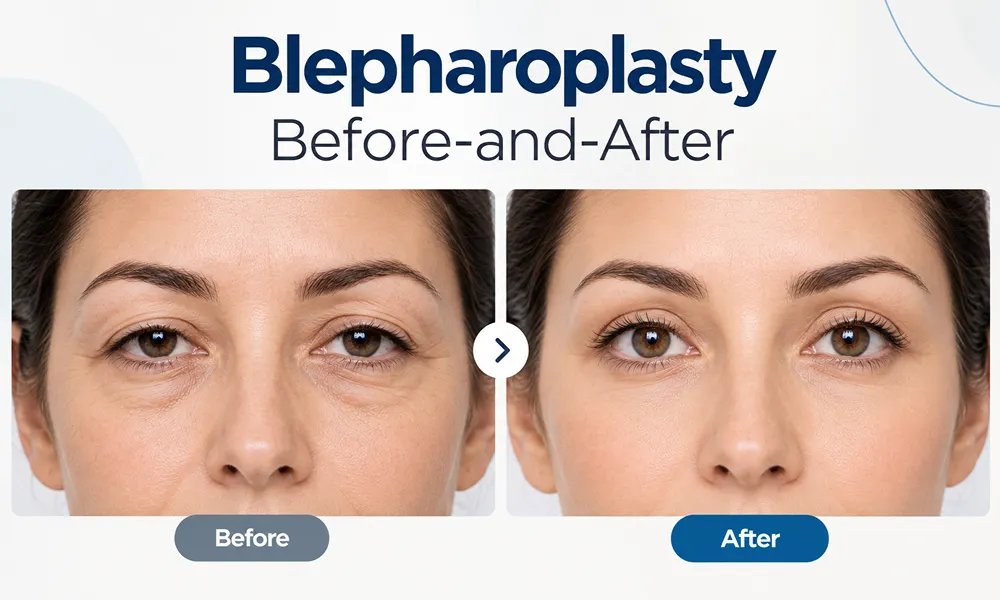
Before Blepharoplasty
- Heavy or ptotic-appearing upper eyelids, typically resulting from dermatochalasis, the accumulation of excess eyelid skin over time.
- Visible periorbital bags or puffiness, often attributable to herniation or anterior displacement of orbital fat.
- A generalised tired or aged periorbital appearance, even in patients who do not otherwise feel fatigued.
- Presentation varies considerably depending on individual eyelid anatomy, skin quality, and the degree of tissue change.
After Blepharoplasty
- A refined upper eyelid contour, achieved through excision of excess dermatochalasis.
- Reduced prominence of under-eye bags, provided excess or displaced orbital fat has been appropriately addressed.
- A periorbital region that generally appears more rested and rejuvenated.
- The surgical objective remains consistent throughout: preservation of natural eyelid architecture and facial expression, rather than an overtly altered appearance.
Outcomes vary considerably between patients. Swelling, bruising, and the healing trajectory all influence early post-operative appearance, and the definitive result typically becomes apparent only once tissue oedema has fully resolved.
What Is Blepharoplasty Recovery Like?
Swelling, bruising, and mild discomfort are all common after blepharoplasty, and these typically ease gradually over the following days. Most patients can return to routine activities as healing progresses, though strenuous activity usually needs to wait until the surgeon gives the go-ahead. The final result only really comes into focus once swelling has fully settled, a process that can take several weeks.
What Determines Blepharoplasty Cost in Mumbai?
The cost of blepharoplasty varies from patient to patient. It depends on factors such as:
- Whether upper, lower, or combined blepharoplasty is performed
- The extent of excess skin or fat being addressed
- Surgical technique used
- Anaesthesia and facility charges
- The surgeon’s expertise and the complexity of the procedure
An individual consultation is needed to assess the eyelids and provide an accurate estimate of the blepharoplasty cost.
How to Choose a Blepharoplasty Surgeon in Mumbai
Many people consider eyelid surgery after years of hearing that they look tired, or when heavy lids start to affect their vision. Look for someone who performs eyelid surgery regularly, preferably an oculoplastic specialist. They should examine your eyelids carefully, ask what bothers you most, and explain why a particular approach suits you.
A good surgeon will also be honest about recovery and risks. Before-and-after photos are helpful, but your eyelids are different, so it depends from person to person.
Conclusion
Blepharoplasty can improve tired-looking eyes when excess eyelid skin, prominent fat or age-related changes are contributing to the appearance. Upper and lower blepharoplasty address different concerns, and the appropriate approach depends on the individual’s eyelid anatomy and the changes being treated.
The procedure is not intended to address every cause of dark circles or under-eye concerns. A detailed assessment helps determine whether blepharoplasty is suitable and what improvement can realistically be expected. Clinics such as TEC® focus on personalised eyelid assessment and treatment planning based on each patient’s individual anatomy and concerns.
FAQs
What is blepharoplasty and what does it improve?
Blepharoplasty is eyelid surgery that can address excess skin, prominent fat, and other structural changes that make the eyes look heavy or tired.
Can blepharoplasty remove under-eye bags?
Yes, when the bags are caused by protruding or displaced fat, or excess lower eyelid skin. It doesn’t address every cause of under-eye puffiness, though.
Can blepharoplasty improve dark circles?
It can, when the dark circles are tied to structural factors like under-eye bags. Where pigmentation, visible blood vessels, or hollowing are the real cause, other treatments tend to be more appropriate.
How long does blepharoplasty recovery take?
Swelling and bruising generally ease gradually over the first few weeks. The final appearance takes a bit longer to settle, as residual swelling continues resolving.
When will I see my blepharoplasty before-and-after results?
Early improvement often shows once the initial swelling goes down, but the final result only becomes clear as the eyelid tissues heal and fully settle.
Is blepharoplasty suitable for everyone?
No. Suitability depends on the individual’s eyelid anatomy, skin condition, medical history, and the specific concern being treated. A specialist assessment is required before surgery.
Does blepharoplasty leave scars?
It does involve incisions, generally placed within natural eyelid creases or other less visible areas where possible. How visible the scar ends up varies from patient to patient as healing progresses.